

![[RECIPE] Bio Ramen with Chicken and Peanut Sauce #13](/img/deotemplate/blog/1/blog/41/41.png)

Protein Diet: An Effective Way to Reduce Body Weight
A protein diet, also known as a high-protein diet, is one of the most commonly chosen methods for rapid weight loss. It is based on increased protein intake while limiting carbohydrates and fats. Supported by solid scientific literature, this diet has gained popularity among both athletes and individuals aiming to lose weight.
Table of Contents
- Scientific Foundations of the Protein Diet
- Effectiveness of the protein diet in weight reduction
- Principles of the Protein Diet
- The Role of Ketosis in the Protein Diet
- Summary
- References
Scientific Foundations of the Protein Diet
The role of protein in the body
Protein plays a key role in tissue building and regeneration, enzyme and hormone production. A high-protein diet may support weight loss through:
- Increased satiety — proteins influence the secretion of satiety hormones (e.g. GLP-1, cholecystokinin) and reduce the level of the hunger hormone ghrelin (Leidy HJ et al., 2015).
- Increased thermogenesis — protein digestion requires more energy compared to fats and carbohydrates (Paddon-Jones D et al., 2008).
- Protection of muscle mass — during calorie restriction, high protein intake minimizes the loss of lean body mass (Phillips SM, 2014).
Effectiveness of the protein diet in weight reduction
Meta-analyses of clinical trials indicate that high-protein diets lead to significantly greater weight loss and improved body composition compared to standard diets (Wycherley TP et al., 2012).
Principles of the Protein Diet
Diet phases
The protein diet usually consists of several phases:
- Intensive reduction phase — very low carbohydrate intake, high protein intake.
- Transition phase — gradual introduction of healthier carbohydrates (e.g. vegetables and fruits with a low glycemic index).
- Stabilization phase — a balanced diet with a predominance of protein.
Allowed products
The protein diet is primarily based on:
- Lean meat (chicken, turkey, beef)
- Fish and seafood
- Eggs
- Low-fat dairy products
- Legumes (in moderate amounts)
- Low-starch vegetables
The Role of Ketosis in the Protein Diet
During the intensive reduction phase, when carbohydrate intake is very low, the body may enter a state of ketosis. At this point, the body begins to burn fat as its primary energy source, producing ketones. Ketosis may accelerate fat burning and help reduce hunger. It is a natural and desirable effect in a high-protein diet, but it requires appropriate health monitoring.
The Dukan Diet
One of the most well-known protein diet models is the Dukan diet, developed by French doctor Pierre Dukan. It consists of four phases: the attack phase (proteins only), the alternating phase (proteins + vegetables), the consolidation phase, and the stabilization phase. The Dukan diet emphasizes high protein intake, minimizing fats and carbohydrates, and gradually reintroducing other food groups. Although this diet may deliver quick results, it is controversial among specialists due to potential nutrient deficiencies and excessive kidney strain, therefore it should be followed under strict professional supervision.
Potential Benefits
- Weight loss
- Improved lipid profile (reduction of LDL and triglycerides)
- Stabilization of blood sugar levels
- Increased muscle mass during strength training
Potential Risks
Although a protein diet is safe for most healthy adults, its long-term use may involve certain risks:
- Kidney strain — especially in individuals with existing kidney disease.
- Risk of deficiencies — limiting vegetables and fruits may lead to vitamin and mineral deficiencies.
- Digestive issues — e.g. constipation due to low fiber intake.
Therefore, it is recommended to consult a physician or dietitian before starting the diet.
DIET-FOOD Protein Product Sets
Here are three specially designed product sets by DIET-FOOD. All products are free from artificial additives, sugar, and synthetic sweeteners – their formulations are based exclusively on natural, organic ingredients. These sets perfectly align with the principles of a high-protein diet while delivering full-value nutrients from natural sources.
PROTEIN FUEL – The Power of Nature
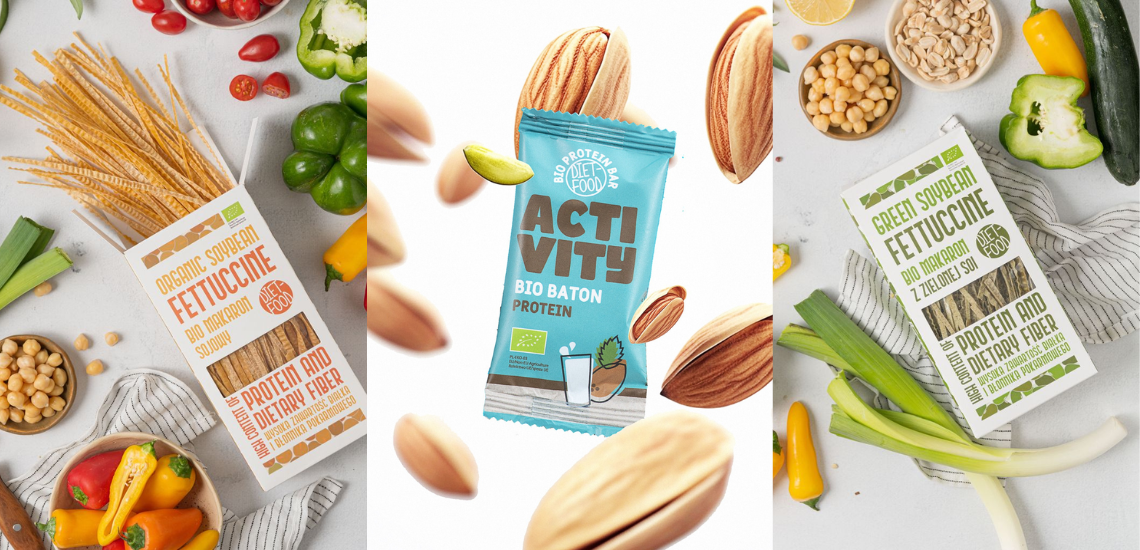
A combination of the highest quality dairy proteins and naturally protein-rich plant ingredients such as soy pasta. A perfect set for those seeking harmony between the strength of animal protein and the beneficial effects of plant-based products.
- Organic ACTIVITY Protein Bar 35 g
- Organic ACTIVITY Bites – fruit cubes with protein 120 g
- Organic Protein Granola Cranberry & Cinnamon 200 g
- Organic Protein Granola Dates & Turmeric 200 g
- Organic Black Soy Spaghetti 200 g
- Organic Green Soy Fettuccine 200 g
- Organic Orange Soy Fettuccine 200 g
VEGE BALANCE – Plant-Based Protein Power
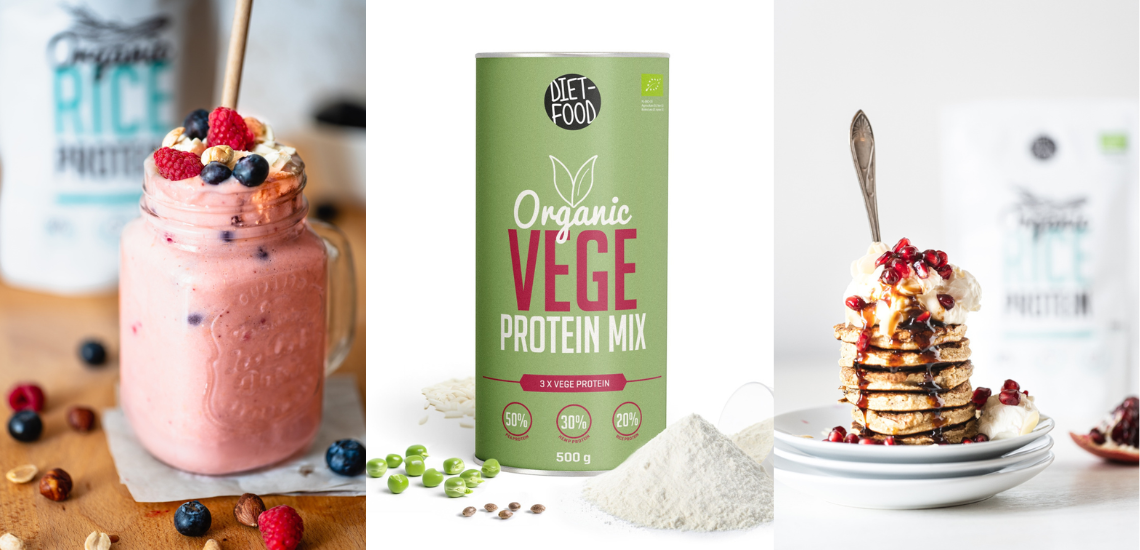
A set dedicated to supporters of plant-based and vegetarian diets. The formulation is based exclusively on plant protein sources and healthy fats that support reduction and muscle recovery.
- Organic Vege Protein Mix 500 g
- Organic Rice Protein 200 g
- Organic Protein Cookies 80 g
- Keto Bowl Organic Peanut Protein 200 g
WOMEN POWER – Protein Strength

Created especially with women’s needs in mind, this set combines products rich in high-quality protein, vitamins, and minerals that support hormonal health and energy.
- Organic Vege Protein Shake – Vanilla 200 g
- Organic Vege Protein Shake – Banana 200 g
- Organic Vege Protein Shake – Orange 200 g
- Organic Vege Protein Shake – Cocoa 200 g
Summary
When properly applied and monitored, a protein diet can be an effective tool in combating overweight and obesity. High protein intake supports satiety, protects muscle mass, and boosts metabolism. However, it is important to remember dietary diversity and monitor potential side effects. DIET-FOOD product sets provide excellent support, making it easier to follow the principles of a protein diet while delivering natural, healthy, and tasty ingredients.
References
- Leidy HJ, et al. The role of protein in weight loss and maintenance. The American Journal of Clinical Nutrition. 2015.
- Paddon-Jones D, et al. Protein, weight management, and satiety. The American Journal of Clinical Nutrition. 2008.
- Phillips SM. Dietary protein for athletes: From requirements to metabolic advantage. Applied Physiology, Nutrition, and Metabolism. 2014.
- Wycherley TP, et al. Effects of energy-restricted high-protein, low-fat compared with standard-protein, low-fat diets: a meta-analysis of randomized controlled trials. The American Journal of Clinical Nutrition. 2012.
The content of this article is for informational and educational purposes only. It does not constitute medical advice and cannot replace consultation with a physician or nutrition specialist.
Comments
No comment at this time!
Leave your comment