![[RECIPE] Bio Ramen with Chicken and Peanut Sauce #13](/img/deotemplate/blog/1/blog/41/41.png)


![[RECIPE] Pad Thai with Chicken and Konjac Noodles #12](/img/deotemplate/blog/1/blog/40/40.png)
Celiac Disease and Gluten-Free Diet — A Comprehensive Guide
Celiac disease is a condition increasingly discussed by both specialists and those interested in a healthy lifestyle. Although its symptoms can vary, one thing is certain — for people with celiac disease, strict adherence to a gluten-free diet is crucial. This article will explain exactly what celiac disease is, how significant the problem is in Poland, why a gluten-free diet is the only effective treatment, and what challenges come with following it. You will also learn how to identify reliable gluten-free products through national and international certifications, and at the end, you will find a suggestion that allows you to safely and deliciously try certified products.
Table of Contents
- What is celiac disease?
- The scale of the problem in Poland
- Why a gluten-free diet is the only effective treatment?
- Challenges in following a gluten-free diet
- Gluten-free certifications in Poland and worldwide
- Summary and special promotion from DIET-FOOD
- Sources
What is celiac disease?
Celiac disease is a chronic autoimmune disorder in which the ingestion of gluten (found in wheat, rye, and barley) triggers an immune response that damages the small intestine's villi. Symptoms include diarrhea, anemia, and osteoporosis. Lifelong avoidance of gluten, even in trace amounts, is necessary.
The scale of the problem in Poland
It is estimated that about 380,000 people in Poland may suffer from celiac disease, with as many as 90–95% undiagnosed — significantly delaying access to proper treatment.
Why a gluten-free diet is the only effective treatment?
Strict adherence to a gluten-free diet from the moment of diagnosis is absolutely essential. Gluten is not optional — it is a medication for people with celiac disease, and avoiding it is the only treatment for this condition.
Challenges in following a gluten-free diet
– Studies show that one of the most difficult situations is eating outside the home — it is hard to be 100% sure that a meal is gluten-free.
– Surveys also indicate that the insufficient availability of gluten-free products in stores is a significant barrier, even for residents of large cities.
Gluten-free certifications in Poland and worldwide
Poland
In Poland, the primary quality mark is the "Crossed Grain" certificate, which indicates products that meet strict standards and undergo regular audits. It is a symbol of safety for consumers with celiac disease.
International standards
Outside Poland, there are also international certification systems, such as:
- Gluten-Free Certification Organization (GFCO)
- Crossed Grain Symbol (used in Western Europe and many EU countries)
- NFCA Certification in the USA
It is important to remember that suppliers may have their own gluten-free certifications compliant with local regulations. Therefore, it is always wise to ensure that a product carries a reliable certification — whether from a Polish or foreign manufacturer.
Summary and special promotion from DIET-FOOD
Celiac disease is a serious condition requiring lifelong adherence to a gluten-free diet — it is not a trend, but a medical necessity. Awareness and availability of safe products are growing in Poland, and national and international certifications are key quality guarantees.
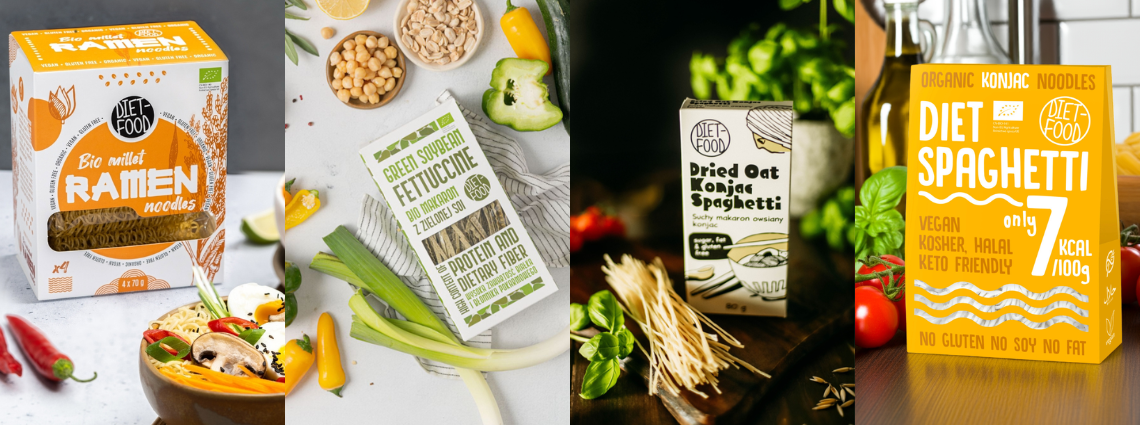
👉 If you want to try different flavors of certified gluten-free pasta and see their quality for yourself, check out our promotional tasting set — a great opportunity to safely and deliciously experiment in the kitchen.
GLUTEN FREE – Flavorful Pastas – Buy Here
Sources
- NCEZ (2019) – Nutritional recommendations for celiac disease: necessity of avoiding gluten (even in trace amounts) and following a diet only after diagnosis.
- PolitykaZdrowotna (2024) – Celiac disease affects approx. 380,000 people in Poland, most of whom are unaware of the condition.
- MedExpress (2024) – A gluten-free diet is not only necessary but is a "medication for people with celiac disease".
- Polish Association of People with Celiac Disease and on a Gluten-Free Diet (2025) – Reports, certifications, and consumer food studies.
The content in this article is informational and educational. It does not constitute medical advice and cannot replace consultation with a doctor or nutrition specialist.
Comments
No comment at this time!
Leave your comment