

![[RECIPE] Bio Ramen with Chicken and Peanut Sauce #13](/img/deotemplate/blog/1/blog/41/41.png)

What is granola and how does it impact a balanced diet?
Granola is one of the most popular products chosen by people who care about a healthy, balanced diet. It combines crunchiness, natural flavor, and high nutritional value, making it perfect as a breakfast, snack, or dessert topping. Rich in cereal flakes, nuts, seeds, and fruits, it provides energy, fiber, healthy fats, and essential vitamins and minerals. In this article, we explain exactly what granola is, how it affects the body, what to look for when choosing it, and why BIO Granola More&More from DIET-FOOD is a valuable addition to your daily menu.
Granola is a popular food product that has gained recognition among both healthy lifestyle enthusiasts and those looking for quick and nutritious breakfast or snack options. Mainly made from cereal flakes, nuts, seeds, and dried fruits, granola is not only tasty but also full of nutritional value. In this article, we explain exactly what granola is, the health benefits it offers, and how it contributes to a balanced diet.
📌 Table of Contents
- What is granola?
- Impact of granola on a balanced diet
- How to incorporate granola into your diet?
- What to look for when choosing granola?
- Bio Granola More&More from DIET-FOOD
- Summary
What is granola?
Granola is a mixture of ingredients such as oats, nuts, seeds, and natural sweeteners (e.g., honey, maple syrup). It is often enriched with fruits, chocolate, or spices, giving it a unique taste and aroma. During the baking process, the ingredients are usually combined with a syrup, creating a crunchy texture and long-lasting flavor.
Granola is extremely versatile – it can be eaten as a snack, added to yogurt, milk, smoothies, or even salads. Thanks to its variety of ingredients, it is easy to adapt to individual taste preferences and dietary needs.
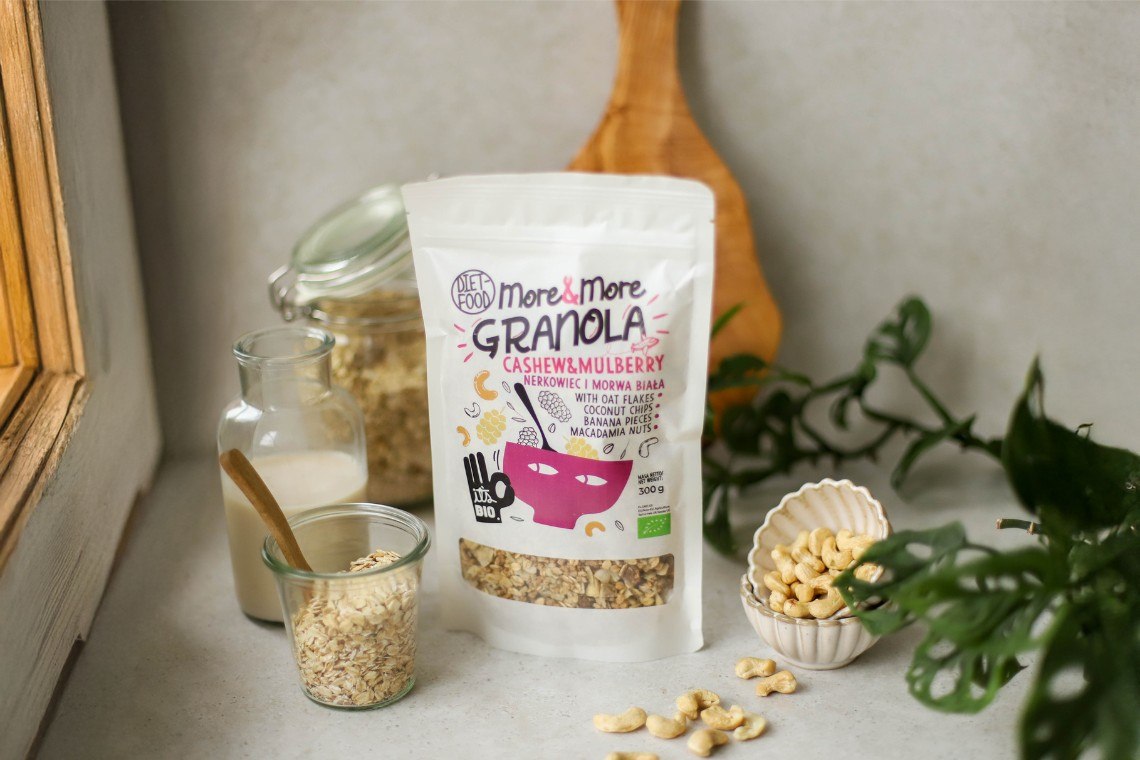
Impact of granola on a balanced diet
- Source of energy
Granola is rich in complex carbohydrates that provide long-lasting energy. Oats, the main ingredient in granola, are digested slowly, helping to maintain stable blood sugar levels and prevent fatigue.
- Support for the digestive system
Granola contains a high amount of fiber from cereal flakes, seeds, and dried fruits. Fiber:
- Regulates digestion, preventing constipation.
- Supports a healthy gut microbiome, which is crucial for immunity and overall health.
- Rich in healthy fats
Nuts and seeds in granola provide unsaturated fatty acids, which support heart health, improve brain function, and help with the absorption of fat-soluble vitamins (A, D, E, K).
- Provides protein
Granola enriched with nuts, chia seeds, or pumpkin seeds is a good source of plant-based protein. Protein is essential for muscle repair, tissue building, and maintaining satiety.
- Natural source of vitamins and minerals
Granola ingredients are rich in vitamins and minerals, such as:
- Magnesium: supports nerve and muscle function.
- Iron: essential for oxygen transport in the body.
- Vitamin E: a natural antioxidant.
- Weight management
Thanks to its high fiber and protein content, granola helps control appetite.
- Versatility in diets
- Vegan diet
- Gluten-free diet
- Low-sugar diet
- Keto diet
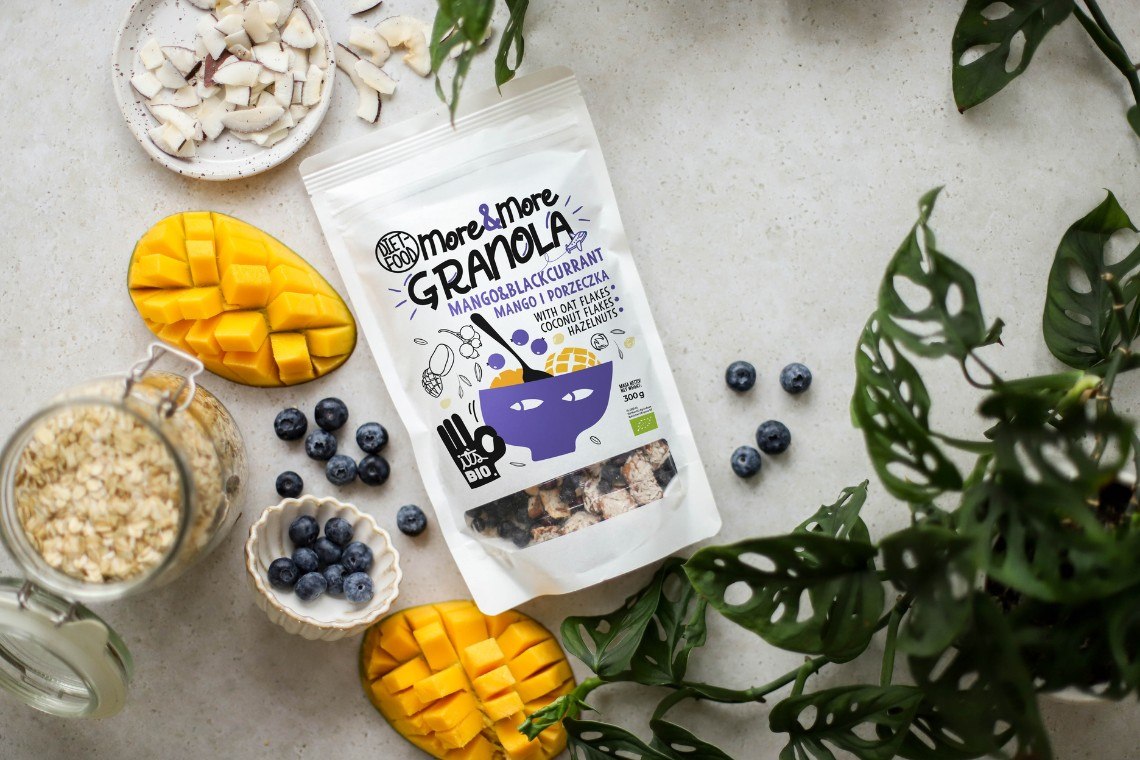
How to incorporate granola into your diet?
- Breakfast: with yogurt or milk.
- Snack: a handful of granola.
- Dessert topping
- Base for bars
What to look for when choosing granola?
- Low sugar content
- No artificial additives
- High in nuts and seeds
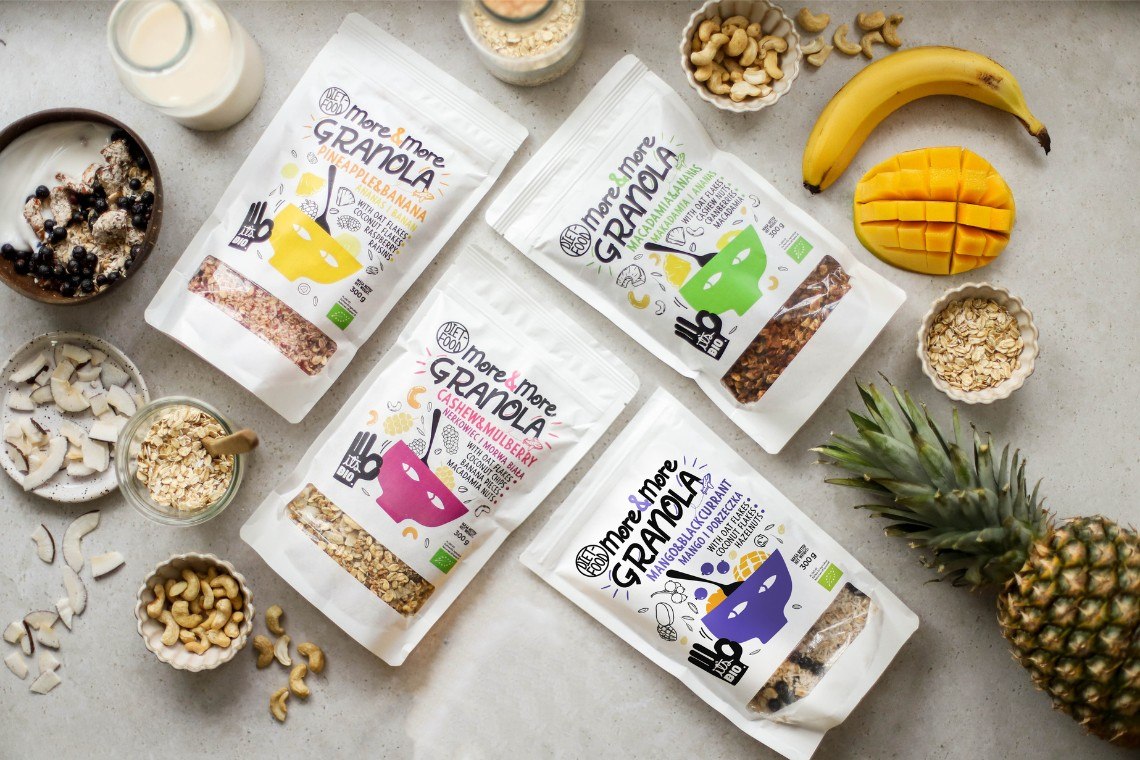
Bio Granola More&More from DIET-FOOD
The largest pack available – 300 g of BIO granola, without added glucose-fructose syrup or white sugar.
Summary
Granola is an excellent product that can enrich any balanced diet.
Discover all granolas from DIET-FOOD: diet-food.pl/granole
Same category
- Collagen Supplementation – How It Works, What Forms Exist, and Why It’s Worth It?
- Organic Ceylon Cinnamon DIET-FOOD – authentic flavor and safety
- DIET-FOOD Creatine Monohydrate – pure strength, convenience, and support for the brain.
- The Best Organic Breakfast Sets – a Healthy Start for Everyone
- Organic Nut Butters from Diet-Food – Pure Pleasure Without Compromise
Comments
No comment at this time!
Leave your comment